
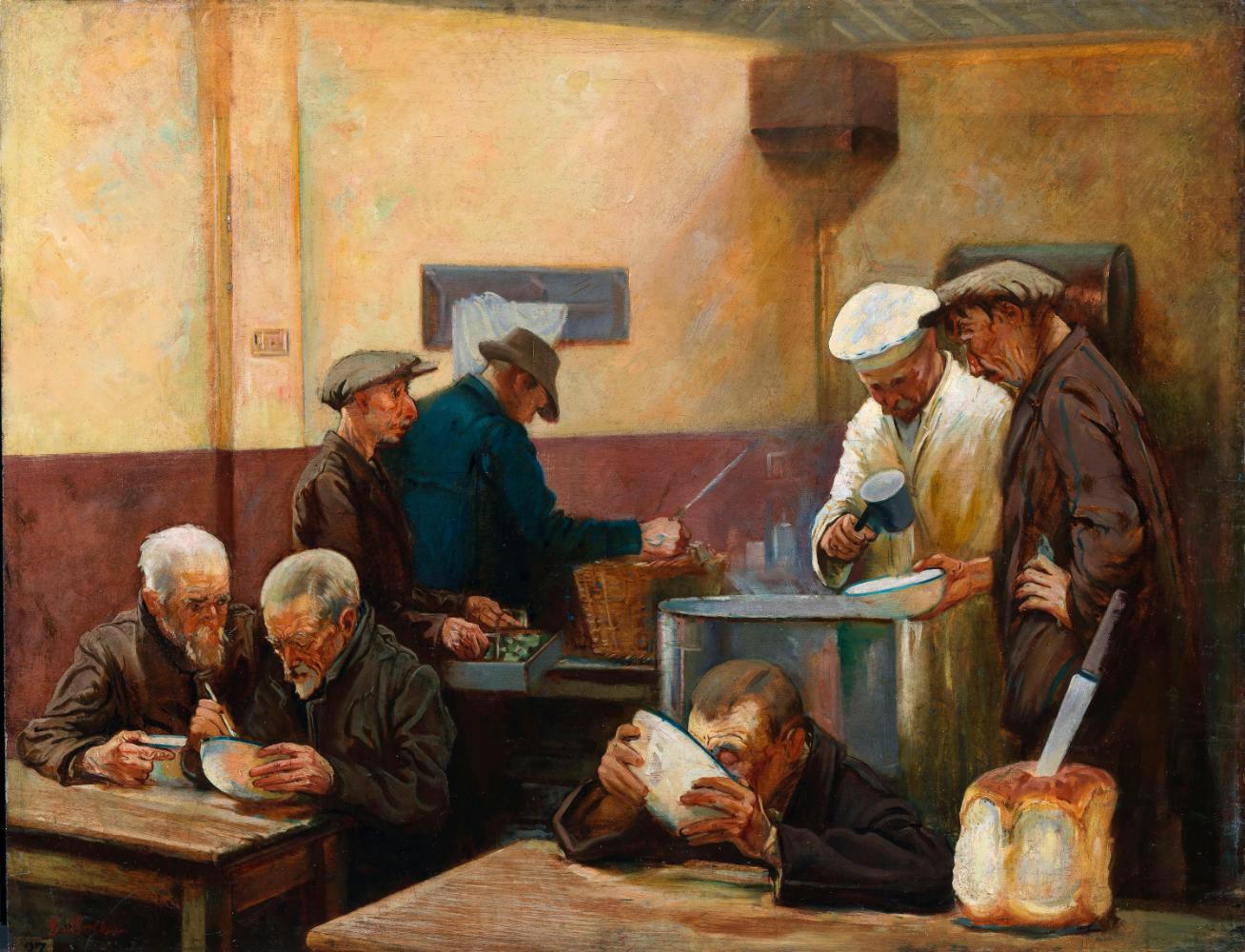
George Collie
, Irish, 1904-1975
Title
The Midday MealDate1927
MediumOil on wood panel
Dimensions
71 x 91.5 cm
Signedlower left: G. Collie
Credit LinePurchased, 2009
Object numberNGI.2009.14
DescriptionThe sombre realism of this painting seems far removed from the formal portraiture and ecclesiastical commissions for which Collie is better known. It was a very significant work for the artist, however, as it garnered for him a Taylor Art Prize in 1927 and a further grant to study abroad. Though the dining hall of the Dublin Union is a communal space, the old men who occupy it in Collie’s painting barely communicate, their focus on the food before them indicative of their straitened circumstances. It seems likely that the painting represents Collie’s response to a particularly topical issue. The Dublin Union, formed in 1918, had very recently been the subject of public disquiet, as the relevant authorities moved to discontinue the provision of meals in favour of the allocation of relief tickets. This measure was vigorously opposed by several organisations and prominent public figures. Collie’s technique and figurative style are relatively conventional and demonstrate the influence of his training at the Metropolitan School of Art, where he too would later teach. It is a rare depiction of urban poverty and charity, however, which presents a starkly alternative image of Ireland to the wholesome images of a subsistence lifestyle on the land in the west favoured by many of Collie’s contemporaries.
March 2016
ProvenancePurchased, Gorrie Gallery, Dublin, 2009 Exhibition HistoryRoyal Hibernian Academy, Dublin, 1976
Irish Art and Modernism 1880-1950, Hugh Lane Municipal Gallery of Modern Art, Dublin; Ulster Museum, Belfast, 1991
Highlights of the R.D.S. Taylor Art Awards, 1878-2005, National Gallery of Ireland, Dublin, 2006
An Exhibition of 18th - 20th Century Irish Paintings, Gorry Gallery, Dublin, 2009
Label TextThough the physical surroundings of the Dublin Union seem at worst austere, the world-weary appearance of the clients and the simplicity of fare available to them record a harsher reality. That the men barely communicate suggests that they lead solitary lives, while their outdoor attire indicates that their presence indoors is merely temporary. The picture provides a poignant counterpoint to the west of Ireland themes that were the focus of many of Collie’s close predecessors and contemporaries. His boldly-modelled figures resemble characters in the work of Seán Keating and Patrick Tuohy, Collie’s former masters at the Dublin Metropolitan School of Art.