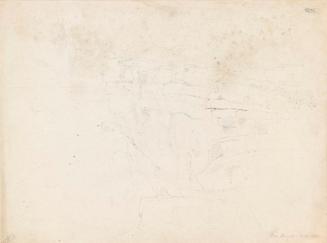
George Petrie
, Irish, 1790-1866
Title
Dún Aonghasa, Inis Mór, Aran Islands, County GalwayDatec.1827
MediumWatercolour and graphite on paper
Dimensions
29.8 x 46.4 cm
Credit LineProvenance unknown
Object numberNGI.7481
DescriptionGeorge Petrie, a renowned antiquarian, artist, writer and collector was born in Dublin on 1 January 1790. From around 1810 he toured Ireland, sketching the landscape. Few guidebooks published in Ireland during the early nineteenth century were without engravings after Petrie’s graceful topographical drawings. He explored many parts of the country, including Connemara and Ulster, paying particular attention to ecclesiastical sites. The drawings made on these tours provided source material for finished watercolour views, which he exhibited at the Royal Hibernian Academy from 1826. Between 1833 and 1846 he worked for the Topographical Department of the Ordnance Survey of Ireland. His major work, The Ecclesiastical Architecture of Ireland, was published in 1845. In the introduction he refers to his drawings:‘For their accuracy I can fearlessly pledge myself’ and goes on to insist that his desire was to ‘preserve trustworthy memorials of monuments now rapidly passing away’. The fact that even today archaeologists and landscape historians use Petrie’s drawings to help plot the history of the Irish landscape is testament to the importance of his studies. Dún Aonghasa perches spectacularly on a cliff overlooking the Atlantic Ocean. Enclosed by three massive dry-stone walls and chevaux-de-frise, it is the largest of the prehistoric stone forts on the Aran Islands. March 2016
Finished work:/Preparatory work: